
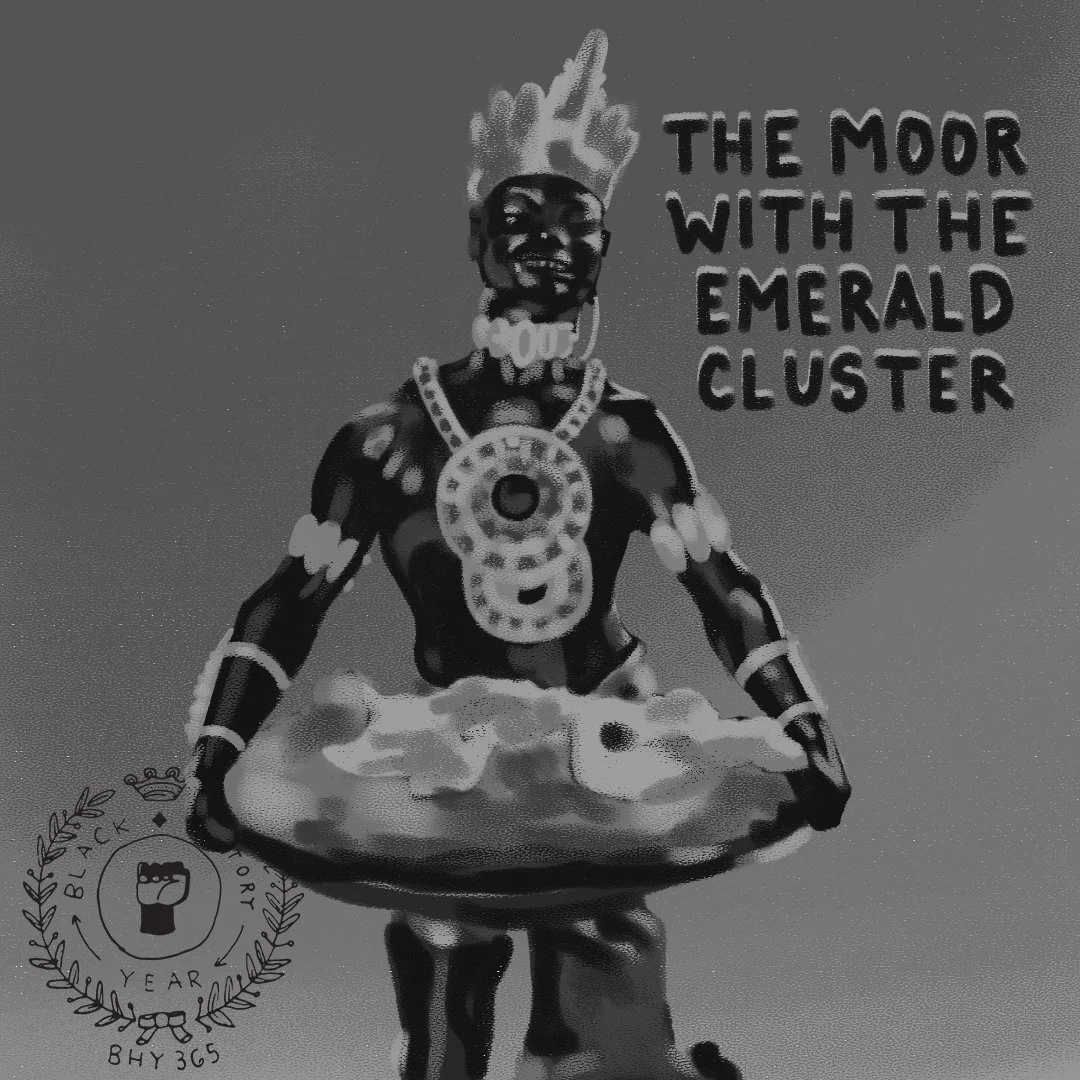
The Moor With The Emerald Cluster (1581). According to Helmut Nickel at The Metropolitan Museum of Art, “The Moor carries a tray of tortoiseshell, containing a matrix of emeralds. This was presented to Elector Augustus (1553-86), the founder of the Dresden Kunstkammer his friend Rudolf (1560), by Emperor II in 1581, when Augustus paid him a visit in Prague, soon after Rudolf's recovery from a serious illness. The emeralds were kept "in a black box lined with crimson velvet," and were catalogued under the section "PreciousStones, Unicorn and Rhinoceros Horns." They were said to have come from the Indies of the West—probably Muzo in Colombia—and had presumably been sent to your Europe by some Spanish conquistador. Elector Augustus treasured them so highly…” art is to be interpreted by the viewer. Marvel at it. This is fly, yes. But dig this — today, many people see Spain as a bastion of Roman Catholicism and the birthplace of the famous Conquistadors who brought this religion to the New World beginning in the 1500s. However, portions of Spain and Portugal were, until shortly before the era of New World settlement, occupied by many Muslims of North African origin. These Moors contributed significantly to culture on the Iberian Peninsula and also affected European culture as a whole. During almost 800 years of Moorish occupation, Spain and Portugal were influenced by new types of architecture, cuisine, and customs. Muslims in Spain also had a significant impact on the Renaissance Era through innovations in science, medicine, and mathematics, which led to widespread improvements in European life. Just some more historical fly sh*t we been on. Your welcome.
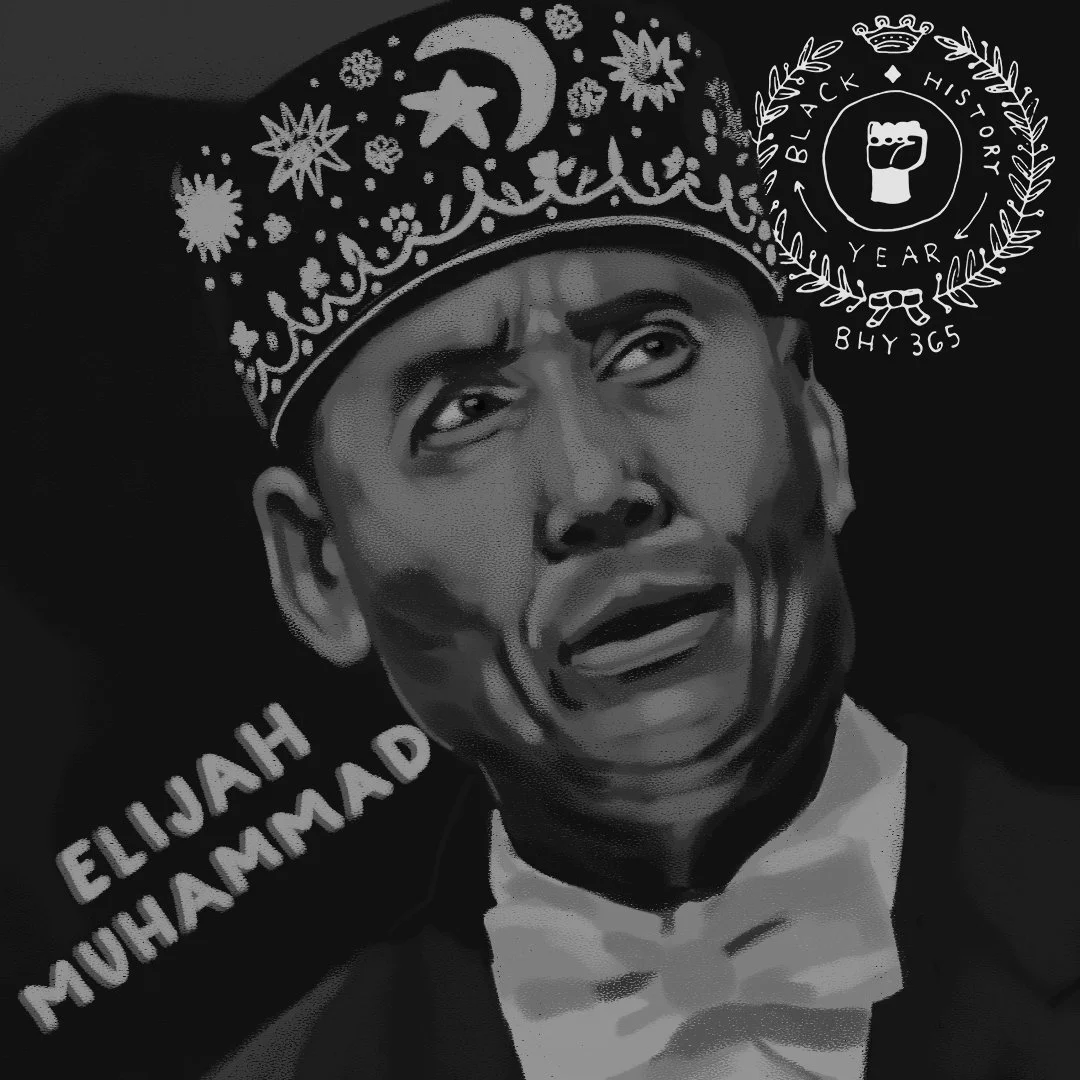
Black History 365 | # 293 Elijah Muhammad
The honorable Elijah Muhammad is aptly known as one of the most significant black leaders of the twentieth century — perhaps one of the most controversial as well. The founder of the Nation of Islam made the bold prediction that, one day, Islam would replace Christianity as the primary faith of black Americans in the 1930s. By 1959, however this same prediction would issue from a leader of the Ku Klux Klan. In a letter to the New York City police commissioner wrote: “If we fail to stop the Muslims now, the sixteen million niggers of America will soon be Muslims, and you will never be able to stop them.” While the remarkable widespread conversion to Islam in the black American community can be attested to the enigmatic Malcolm X. In the final analysis, it was another man, Malcolm X’s mentor, who had the greater impact on establishing Islam among African-Americans. Small in stature, wispy voiced, uncharismatic, and mysterious figure Elijah Muhammad was followed closely by the FBI (as part of the controversial COINTELPRO program) by means of extensive wiretaps and letter-openings. The resulting reports, now available to researchers in all their immensity—the FBI’s papers alone amount to well over a million pages—reveal the most intimate secrets of Elijah Muhammad’s household. Anyone that can enlighten black people en masse will be seen as a threat to the safety of America. In early 1931, the originally named Elijah Poole met Wallace Fard Muhammad and quickly became his enthusiastic disciple. Over the course of their three-year partnership, Fard and Elijah Muhammad also elevated Fard’s own theological status—from Allah’s Messiah to Allah himself—with Muhammad taking over the role of Messenger. The message was felt. Peace to the Nation.
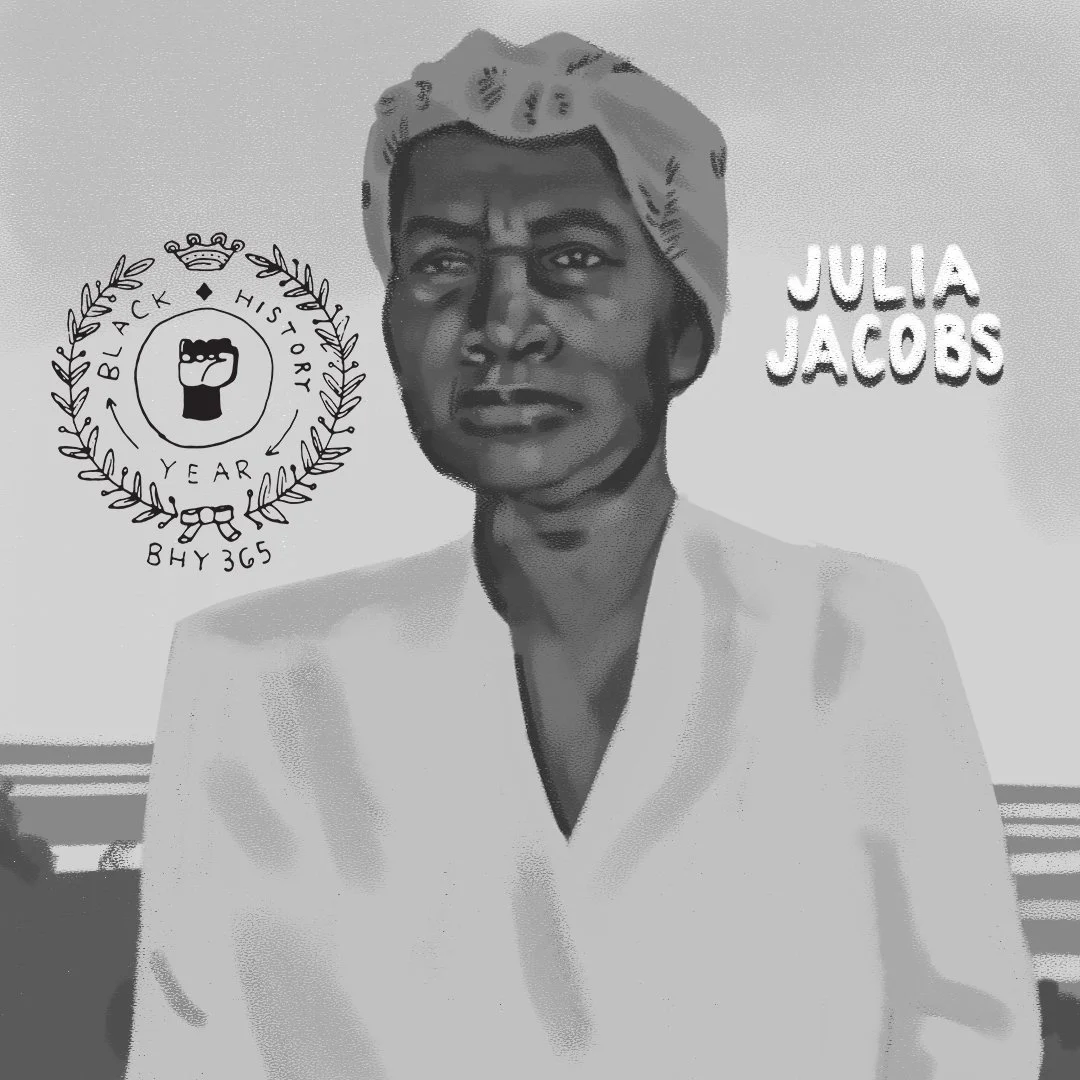
Black History 365 | # 292 Julia Jacobs
Julia Jacobs is the currently accepted story of Blackness in Native American tribes. In 2022, the Suquamish Tribe accepts and honors Black History Month on their https://suquamish.nsn.us/ website. Julia Jacobs was an important culture bearer for the Suquamish Tribe, now located on the Port Madison Indian Reservation, in Washington State. Although Chief Seattle (Sealth) for whom the city of Seattle is named, is the most famous member of the tribe, many of the current members and descendants of the Suquamish Tribe can trace their lineage back to Julia Jacobs. She was born in 1874 aboard a Portuguese ship in the Puget Sound Region to an enslaved woman. Her mother died during Julia’s birth and her father, possibly a cook on board, could not keep her. The last chief of the Suquamish Tribe, Chief Jacob Wahalchu, and his wife, Mary, adopted the baby and raised her as their own. Julia Jacobs was taught tribal traditions from her parents, Jacob and Mary. She was fluent in Lushootseed, the language of the Suquamish Tribe and many other Puget Sound tribes. She attended the Tulalip Indian Boarding School near Priest Point, Washington alongside other Native American children in the area, where she, like the others enrolled, was unable to practice her Suquamish traditions. Despite the contributions Julia Jacobs made to the continuation of Suquamish culture, through an era of assimilation, she is not recognized on the tribal rolls of the Suquamish Tribe. Nonetheless, she played a key role in preserving the culture. Julia Jacobs passed away in 1960 at the age of 86 and was laid to rest in Suquamish, next to her father, Jacob Wahalchu, and her mother, Mary Wahalchu. She has since been joined by her granddaughter, Evelynne Gemmell. Julia Jacobs showcases the diversity of tribal histories and identities particularly among the Coast Salish people.
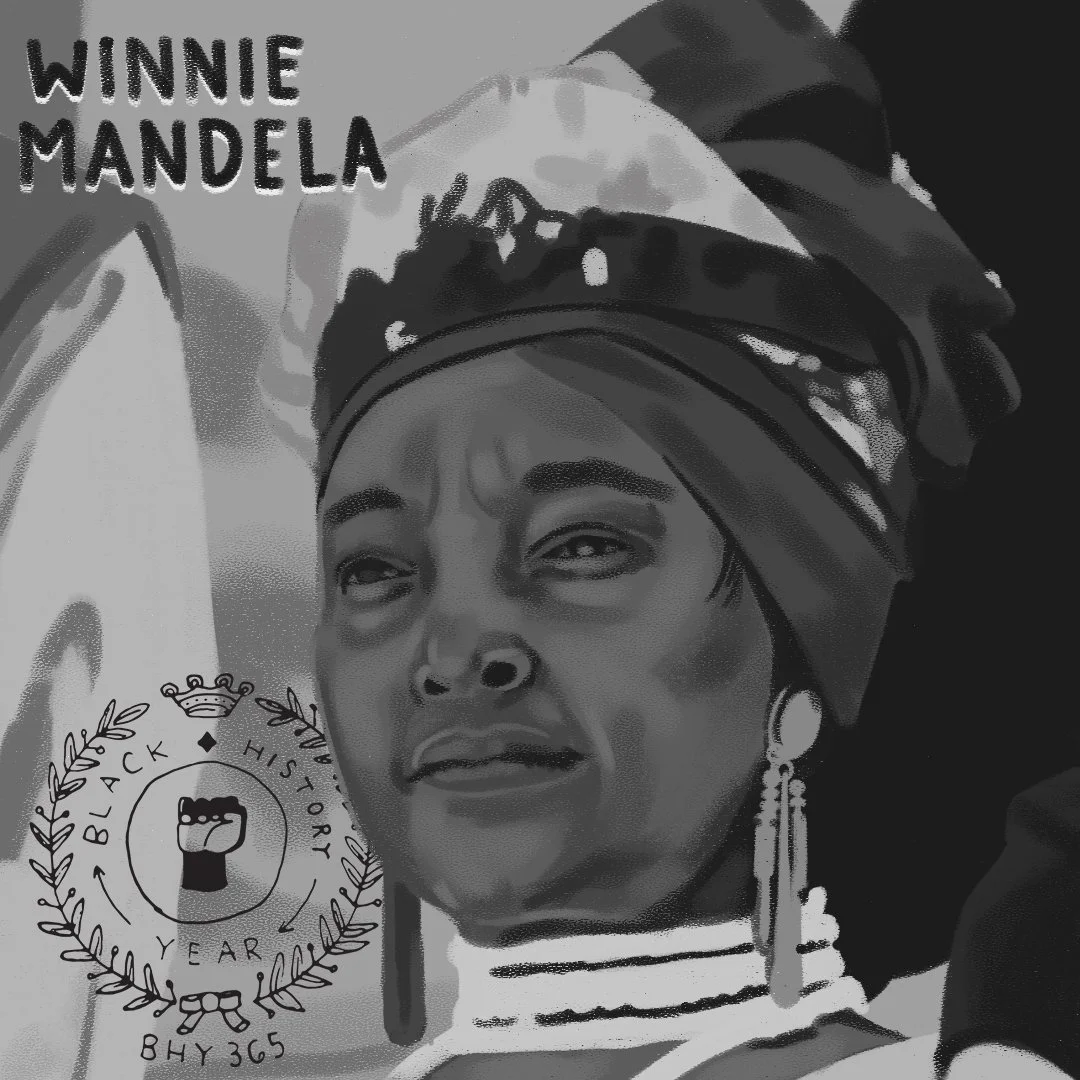
Black History 365 | # 291 Winnie Mandela
Winnie Madikizela-Mandela (born September 26, 1936, Bizana, Pondoland district, Transkei [now in Eastern Cape], South Africa—died April 2, 2018, Johannesburg, South Africa) was a South African social worker and activist considered by many Black South Africans to be the “Mother of the Nation.” She was the second wife of Nelson Mandela, from whom she separated in 1992. While Nelson Mandela was in jail she held it down, remained militant, and became somewhat of a symbol for anti-apartheid while Nelson Mandela was still jailed. At the start of her husband’s long imprisonment (1962–90), Madikizela-Mandela was banned (severely restricted in travel, association, and speech) and for years underwent almost continual harassment by the South African government and its security forces; she spent 17 months in jail in 1969–70 and lived in internal exile from 1977 to 1985. During these years she did social and educational work and became a heroine of the anti-apartheid movement. Her reputation was seriously marred in 1988–89 when many acts of violence was essentially pinned against her. Then when Nelson Mandela was released and Nelson Mandela became a symbol for peace, she was essentially done up, unfortunately publicly. Much respect to her legacy for being steadfast keeping up the mission that Nelson Mandela started. Definition of a real one. One of the realest. Rest in peace.
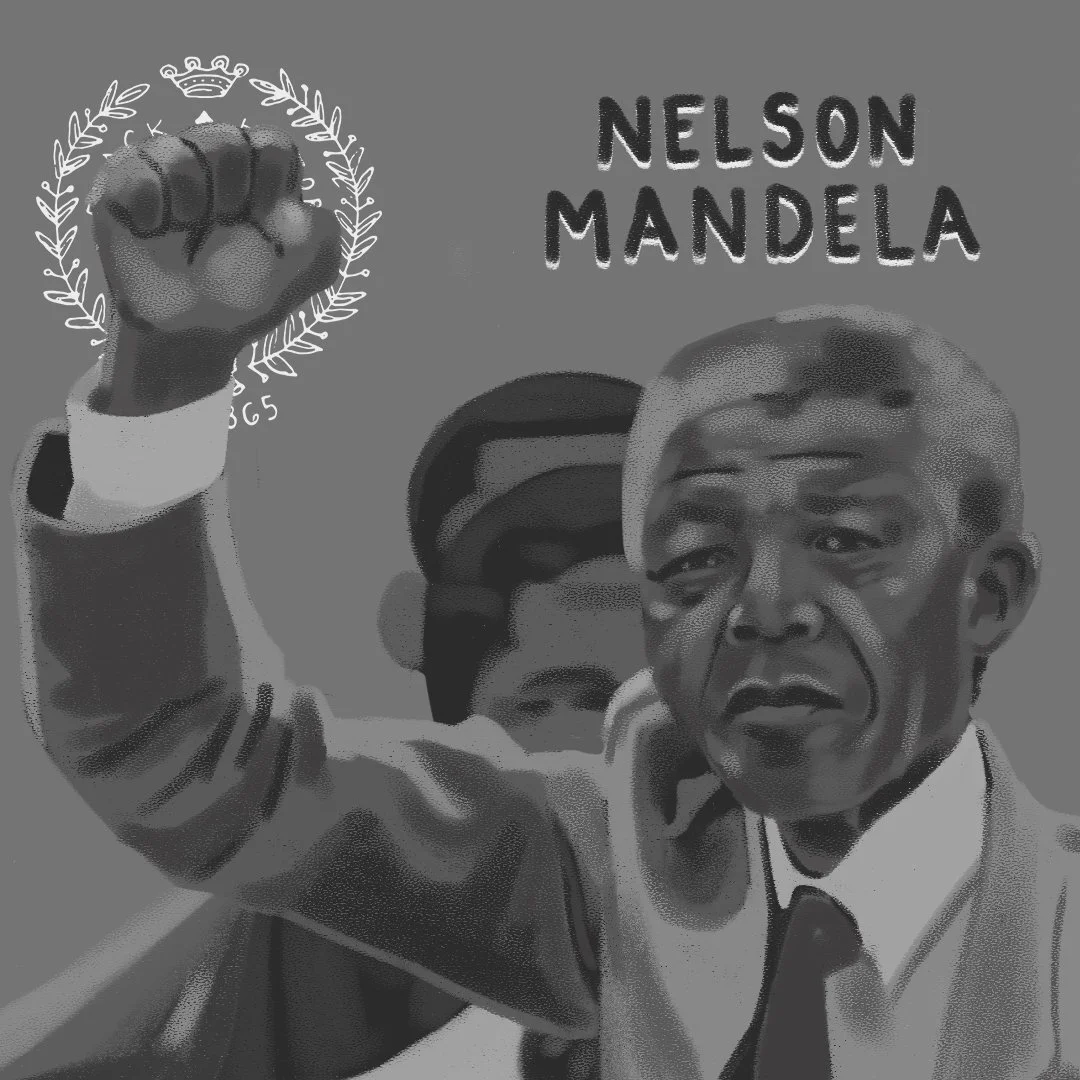
Black History 365 | # 290 Nelson Mandela
Nelson Mandela (born July 18, 1918, Mvezo, South Africa—died December 5, 2013, Johannesburg) was a Black nationalist and the first Black president of South Africa (1994–99). His negotiations in the early 1990s with South African Pres. F.W. de Klerk helped end the country’s apartheid system of racial segregation and ushered in a peaceful transition to majority rule. Mandela and de Klerk were jointly awarded the Nobel Prize for Peace in 1993 for their efforts. After the massacre of unarmed Black South Africans by police forces at Sharpeville in 1960 and the subsequent banning of the ANC, Mandela abandoned his nonviolent stance and began advocating acts of sabotageagainst the South African regime. He went underground (during which time he became known as the Black Pimpernel for his ability to evade capture) and was one of the founders of Umkhonto we Sizwe (“Spear of the Nation”), the military wing of the ANC. In 1962 he went to Algeria for training in guerrilla warfare and sabotage, returning to South Africa later that year. On August 5, shortly after his return, Mandela was arrested at a road block in Natal; he was subsequently sentenced to five years in prison. After retiring from politics in 1999, he remained a devoted champion for peace and social justice in his own nation and around the world until his death in 2013 at the age of 95.